 Right after Hurricane Katrina, newly homeless New Orleanians gathered on Claiborne Avenue under Interstate 10, and lived under tents and blankets. Some worked in hotels in the French Quarter and the Central Business District, but still didn’t make enough to pay for a place to live. For a time, their numbers went down. But now, six years after the storm, homeless folks are under the Claiborne Bridge, and under the Earhart Bridge, in large numbers again.

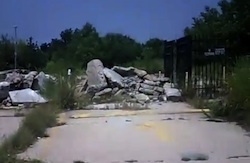 In far New Orleans East, between Lake Pontchartrain and I-10, sits the forgotten community Little Woods. Since Katrina, few resources and programs of assistance have reached this community, which is 95% Black.
 On August 29, 2011, the 6th anniversary of Hurricane Katrina, I asked Mr. James Perry to reflect on the significance of the day, and what positive developments he’s seen since the storm.
 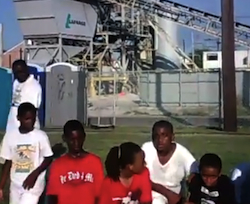 The Norwood Thompson playground is a gathering place for all ages in Gert Town. It is a place of fellowship for residents of this New Orleans neighborhood, and provides a break for working mothers to spend time with their children.
 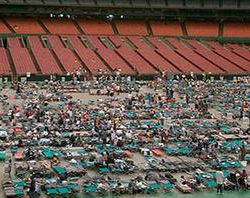 I recently had the opportunity to speak with several neighboring friends and associates that are from New Orleans, but now living in Houston. Two I met, and they became a part of my life, while I was residing in Houston after Hurricane Katrina. I wanted to know, more than five years after leaving New Orleans, why were they still in Houston? Did they consider themselves displaced? What did they think about New Orleans and returning home?
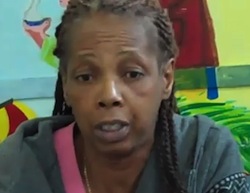 “Homeless” equals “hungry,” so people think. So that is the way society addresses homelessness; the Homeless are fed in soup kitchens, but have no place to store their food. Homeless people are often also assumed to be unemployed and on the streets. But there are new, unexpected faces of homelessness on our blocks.
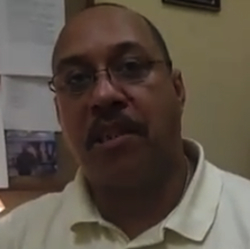 Last month, I sat down with my friend Clarence Adams Sr. to discuss the current state of homelessness in New Orleans, LA. Mr. Adams is currently the Administrator at Ozanam Inn, a homeless shelter for men, where he has worked for the past sixteen years. In this video, Mr Adams discusses the definition of "homeless," and the way Ozanam works to make homeless people Whole from a holistic perspective, including programs that go beyond just serving meals.
 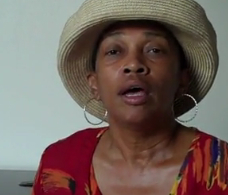 My name is Linda Jeffers. At the age of 59 years and 11 months, I became homeless for the second time in five years. My employment ended and I was not able to continue with my financial commitments. I was forced to move in with a friend.