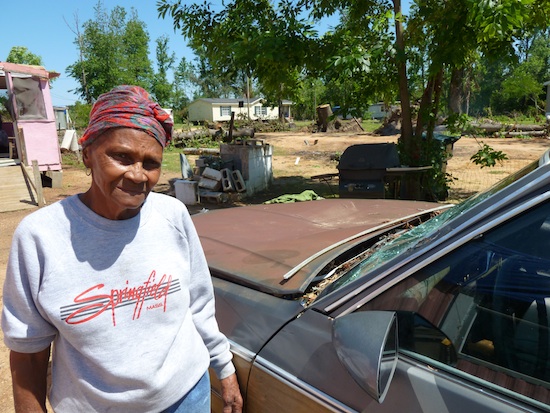
 “I hate disasters,” Derrick Evans has said grumpily and repeatedly over the past several days. As a resident of coastal Mississippi and a Gulf Coast advocate, Evans has been through situations like this before – Katrina, Rita, Gustav, Ike, BP, to name a few.


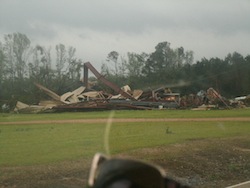 Like Holt-Peterson Road near John Wathen's place outside Tuscaloosa, I have seen total destruction in nearby Alberta City and Crescent Ridge Road, in Birmingham's African-American community of Pratt City (approximately 7,000 homes), and elsewhere.
 The number one question everyone has asked me since
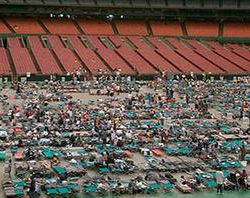 I recently had the opportunity to speak with several neighboring friends and associates that are from New Orleans, but now living in Houston. Two I met, and they became a part of my life, while I was residing in Houston after Hurricane Katrina. I wanted to know, more than five years after leaving New Orleans, why were they still in Houston? Did they consider themselves displaced? What did they think about New Orleans and returning home?
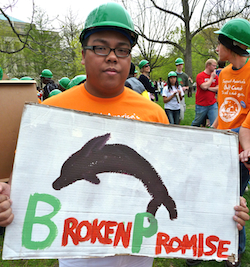 The wind blows soothingly as I’m sitting on the edge of the pier. Clouds blemish the open sky, which is flourished with various shades of reds and oranges. The sun is slowly setting in the distance, casting dark shadows against the numerous boats anchored to the desolate docks.
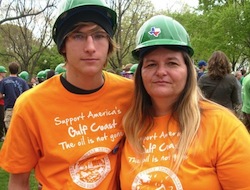 My dad used to work at one of the chemical plants in the Point Comfort/Port Lavaca area in Texas, about a two and a half hour drive southwest from Houston. The plant produces plastics and PVC pellets which are used to make anything from sandwich bags to molded products. My father was a waste-water operator. They repeatedly had him send contaminated water out into our bays. Many of these contaminants are cancer causing agents.
 More than half of the Mississippi's swollen waters are beginning to flood Louisiana's Cajun Country and the Atchafalaya Basin. Today, floodwaters diverted from the Mississippi River are expected to reach Morgan City, Louisiana (population 12,000). This flooding comes after the Army Corps of Engineers' decision last Saturday (May 14th) to open the M
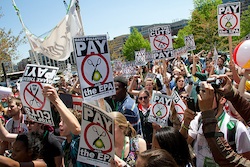 There is a moment between intending to change and actually making a change that is as large and silent as the far reaches of the universal plains. For some, it is a split second. For others it is years. For the collective conscience, it may be several lifetimes.


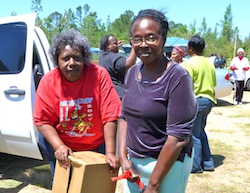 On a beautiful late afternoon in early May, Dedrick Benison and Michael Calvin are quietly surveying the house that came crashing down around them just a week before. On April 27th they were watching a movie here, a neighbor’s house on the catfish farm where the men live and work, near Forkland, Alabama. Moments later a tornado collapsed the roof and ripped off the kitchen wall, sending furniture and splintered wood flying.
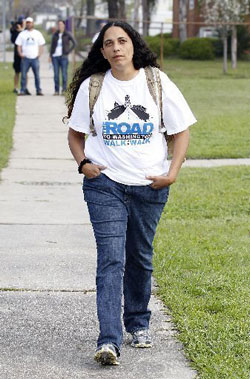
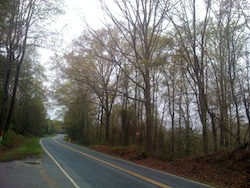 More than a month after returning home from her walk to Washington, D.C., Gulf Coast mom and advocate Cherri Foytlin thanks all of the people who made the trip possible. She walked to D.C. from New Orleans to call for action to end the BP oil disaster.
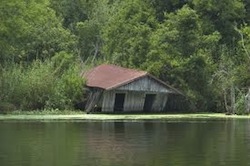 My name is Baley Martinez. I am from the community of Grand Caillou, in Dulac, Louisiana (south of Houma). I am a part of the 17,000 member tribe United Houma Nation. I was born and raised in this community and I am currently 18 yrs old. Already in my lifetime, I have seen the drastic changes in the bayou region of South Louisiana.
